This publication, an overview of the tax landscape across six key ASEAN markets: Indonesia, Malaysia, the Philippines, Singapore, Thailand, and Vietnam, serves as a guide in navigating through evolving tax and regulatory landscape.

Filter insights by:
Popular topics
Featured insights
MFRS 18 ‘Presentation and Disclosure in Financial Statements’ was issued by the Malaysian Accounting Standards Board (MASB) in June 2024. MFRS 18 replaces MFRS 107 ‘Presentation of Financial Statements’ for annual reporting periods beginning on or after 1 January 2027.
On 5 January 2026, the Inland Revenue Board of Malaysia (IRBM) has issued a Media Statement, Operational Guideline (effective 1 January 2026) and Frequently Asked Questions (FAQs) regarding Stamp Duty Special Voluntary Disclosure Programme (SVDP) on 28 January 2026.
Our latest insights
These are the results of the Grant Thornton Global Dynamism Index (GDI) 2013, an annual research project designed by the Economist Intelligence Unit, which ranks the development of the business growth environments of 60 of the world's largest economies over the past 12 months.
Many companies find the accounting for deferred tax causes significant practical difficulties. This guide summarises the approach required by IAS 12 'Income Taxes' and provides examples of the disclosures required by it. It also looks in detail at some of the more complex areas of preparation of a deferred tax computation, for example the calculation of deferred tax balances arising from business combinations.
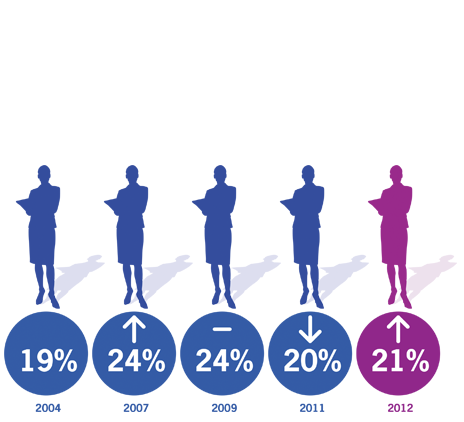
The past 12 months have seen women take the lead in some of the toughest economic and political environments, and they also head governments in countries such as Argentina, Australia, Brazil and Thailand.
We believe that dynamic organisations need to apply both reason and instinct to decision making. Deciding which markets your business should operate in is no different.
Increasing attention on companies’ cash generation and liquidity position has led financial statement users, regulators and other commentators to focus increasingly on the Statement of Cash Flows. However, this additional focus and scrutiny has also highlighted some common errors and inconsistencies in its preparation. This Guide aims to remind management of IAS 7's basic requirements; highlight interpretative and practical application issues; and provide insights to address these issues.