This publication, an overview of the tax landscape across six key ASEAN markets: Indonesia, Malaysia, the Philippines, Singapore, Thailand, and Vietnam, serves as a guide in navigating through evolving tax and regulatory landscape.

The e-Invoice Specific Guideline (e-Invoice Specific Guideline Version 4.6) and the e-Invoice General Frequently Asked Questions (FAQs) were updated by the Inland Revenue Board of Malaysia (IRBM) on 5 January 2026. There are salient changes to the e-Invoice Specific Guideline and the General FAQs.
This article covers MFRS 3’s disclosure requirements. An illustrative disclosure is provided at the end of this article, including insights on certain disclosure areas.
This issue provides guidance on the effect of events after the reporting period on valuation, impairment and existence of financial assets.
Dynamic businesses at the forefront of M&A activity highlights an increasing importance for M&A in driving growth. There is a clear acknowledgment from the 12,500 businesses surveyed that acquisitions will be needed to supplement existing operations.
24%: that is the proportion of women holding the most senior roles in businesses across the globe.
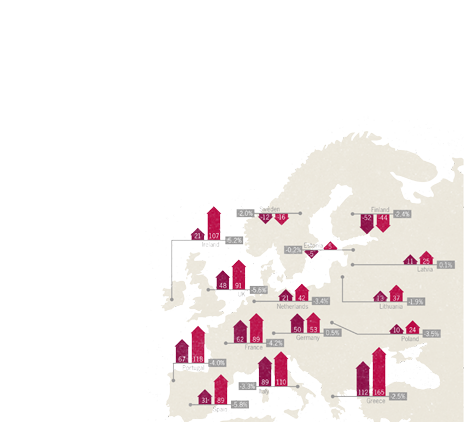
Developers, property companies, investors and homeowners suffered disproportionately during the financial crisis. But now, finally, expectations for profitability, jobs and orders are all on the rise.
This publication guides management through the top 20 disclosure and accounting issues identified by Grant Thornton as potential challenges for IFRS preparers.
This issue provides guidance on selecting an appropriate amortisation method for intangible assets in accordance with MFRS 138 Intangible Assets.
The role of leaders in creating successful businesses and driving growth is crucial. How these leaders run their teams and make decisions can be the difference between success and failure. But do the leadership characteristics displayed by leaders vary from region to region?
This issue provides the continuation of the requirements of MFRS 139 Financial Instruments: Recognition and Measurement on trade receivables and the related impairment model.
Drawing on data and insight from the Grant Thornton International Business Report (IBR), the Economist Intelligence Unit (EIU) and the International Monetary Fund (IMF), The global economy in 2014 answers these questions and more.
This issue reflects the requirements of MFRS 139 Financial Instruments: Recognition and Measurement on trade receivables and the related impairment model.
IAS 39 ‘Financial Instruments: Recognition and Measurement’, the previous Standard that dealt with hedge accounting, was heavily criticised for containing complex rules which either made it impossible for entities to use hedge accounting or, in some cases, simply put them off doing so.
This Budget analysis provides details on various tax measures that were announced in the 2014 Budget speech.
The appetite for cross-border deals has rocketed by 18% during the past 12 months. This is the key finding from our latest research that looks at attitudes to mergers and acquisitions (M&A) among business leaders worldwide.
Presidential elections in some of the world’s largest economies, the sovereign debt crisis and the US fiscal cliff have all contributed to a global sense of economic uncertainty. How are major and developing markets faring in the face of these developments and what does the year ahead have in store?
These are the results of the Grant Thornton Global Dynamism Index (GDI) 2013, an annual research project designed by the Economist Intelligence Unit, which ranks the development of the business growth environments of 60 of the world's largest economies over the past 12 months.