This article deals with Step 3 of the five-step model, which covers determining the transaction price.

Filter insights by:
Popular topics
Featured insights
Understand the mandatory sustainability assurance requirements, implementation timeline and key implications for businesses including steps to strengthen their reporting processes, data quality and internal controls.
Both of the e-Invoice Guidelines (e-Invoice Guideline Version 4.8 and e-Invoice Specific Guideline Version 4.9) and the e-Invoice General Frequently Asked Questions (FAQs) were updated by the Inland Revenue Board of Malaysia (IRBM) on 30 August 2026, 4 September 2026 and 7 September 2026. Let's understand the salient changes to the guidelines.
Our latest insights
Cyber-attacks are set to grow in their number and nature; those companies that embed security measures into their culture will be most successful at fending them off, says Paul Jacobs
Applying MFRS 107 Statement of Cash Flows gives rise to a number of interpretive and application issues. Increasingly, regulators and other commentators on financial statements are highlighting errors or inconsistencies in application of the standard.
To succeed in the B2B sharing economy, businesses need to understand what drives customers who are willing to use crowdsourced and automated services LiquidSpace specialises in renting out spare office space in existing businesses by the hour, the month or longer. Users can hire space via the company’s app and be sitting in a business’s boardroom within minutes. They can add their own office space to the inventory too.
Applying MFRS 107 Statement of Cash Flows gives rise to a number of interpretive and application issues. Increasingly, regulators and other commentators on financial statements are highlighting errors or inconsistencies in application of the standard.
Choosing the right leader for your business is fundamental to its long-term success. So why are so many family firms not planning for succession effectively?
Aston Manor Cider, one of the world’s largest independent cider producers, is no stranger to the export market. The UK-based company’s specialty beverage is available in more than 20 countries including the USA, Russia and a number of African nations
Three quarters of business leaders would pay more taxes in exchange for greater clarity from authorities on what is acceptable. And while few expect a global agreement any time soon, the majority would like to see their governments take unilateral action to help achieve this aim.
This issue discusses the accounting for financial liabilities with a demand feature (on-demand financial liabilities). This publication considers the accounting implications when the entity no longer expects the counter-party to demand repayment.
The slump in oil prices has its winners and losers. Jim Menzies, global leader for the food and beverage sector at Grant Thornton, says the outlook is good for food and beverage companies. While Linda Beal global leader for the oil and gas sector at Grant Thornton, says, oil and gas companies are facing significant challenges.
As the International Accounting Standards Board (IASB) meets today (22 July 2015) to discuss the 2017 implementation date for new global revenue recognition rules, Grant Thornton is asking the accounting board to delay implementation, as a global business survey finds that many businesses are not expecting to be ready by 2017.
In light of growing international interest and scrutiny of corporate practices we set out to explore how three major aspects of governance – the role of culture, board composition and strategic planning – are affecting businesses around the world.
Although some see International Financial Reporting Standards (IFRS) as a regulatory burden, the evidence suggests that global standards actually oil and accelerate the wheels of global economic growth. Andrew Watchman explains.
Loan agreements often include covenants that, if breached by the borrower, permit the lender to demand repayment before the loan’s normal maturity date. Such covenants may, for example, require the borrower to maintain one or more key financial ratios (such as interest cover or a debt to equity ratio) above or below a stated benchmark level.
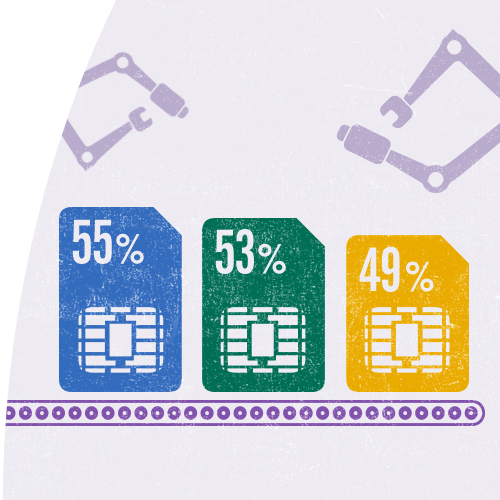
Rising labour costs and the quest for productivity are driving businesses to automate. Finding new roles for redundant workers will be the next challenge.
Giving up the CEO role is one of the toughest challenges an entrepreneur will face, but doing it successfully will help their business to grow. This article draws on experience of Swedish CEOs and advisers to help business leaders make the transition smoothly.
This issue provides guidance on accounting for debt instruments that include options allowing the borrower to repay the debt before the end of its full contractual term.